


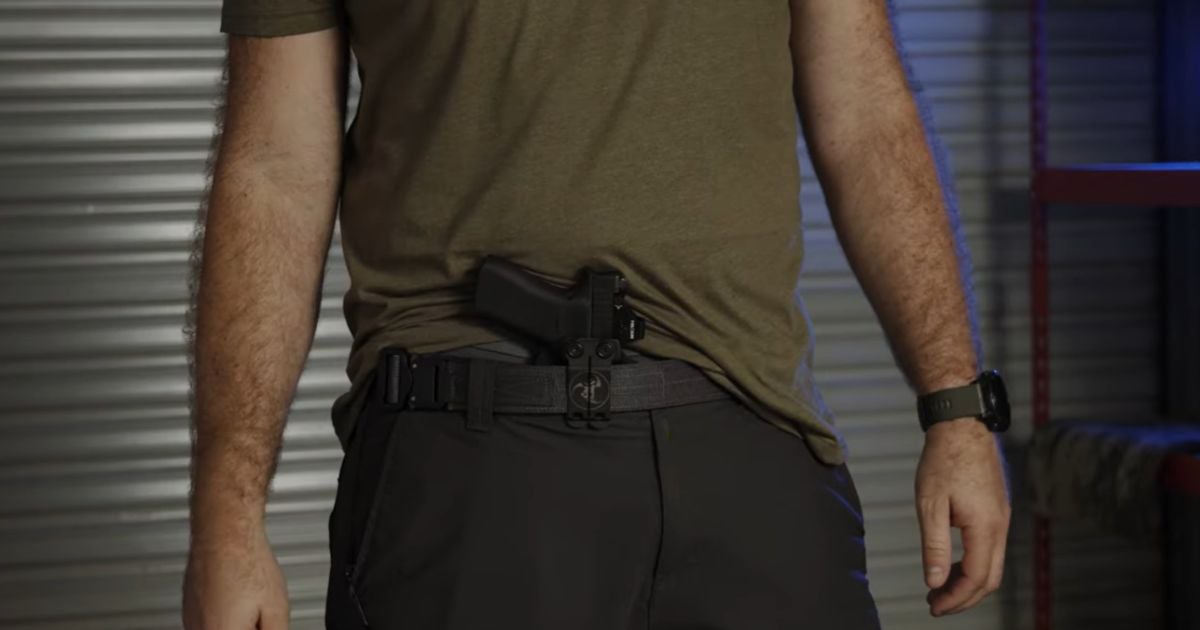
EDC for Different Professions: Building a Work-Ready Setup
Everyday carry (EDC) for work is the setup you use every day that supports your job while staying comfortable, discreet, and reliable throughout the day.
That means your work EDC should help you do your job better. It should not slow you down, draw attention, or fight against your dress code. Your EDC work setup has to match how you actually move, sit, lift, drive, or interact with people.
Work EDC must also integrate with your clothing. A belt that works with jeans on the weekend may not support concealed carry under business-casual slacks. A setup that feels fine standing may print the moment you sit down. That’s why work EDC requires more planning than off-duty carry.
Why Your Profession Changes Your EDC Setup
The goal is simple: your gear should stay secure, stay hidden when needed, and stay comfortable without constant adjustment.
If your setup shifts, prints, digs into your side, or forces you to change how you move, it’s not built for your profession. It’s just gear you happen to be wearing to work.
Here’s how your work environment shapes your setup.
Dress Code
- Business attire – Slacks, tucked shirts, and slimmer cuts leave less room for bulk.
- Uniformed work – Uniforms often require a consistent appearance, so clean lines matter.
- Outdoor workwear – Durability becomes the priority, since your setup has to handle movement, sweat, and friction.
Physical Movement
- Desk-bound – Sitting increases pressure at the waistline, and long periods of sitting can reveal printing issues you wouldn’t notice while standing.
- Driving – Access and comfort shift when you’re behind the wheel. Gear that feels fine standing may dig in when seated.
- Standing or walking all day – Weight distribution becomes key. If your setup sags or shifts, you’ll adjust it constantly.
- Climbing or lifting – Twisting, bending, and lifting expose weak support fast.
For more about EDC and movement, read How to Avoid Printing When Carrying Concealed, How to Keep Your Belt Rig from Sagging, and How to Conceal Carry While Driving.
Environment
- Urban office – Discretion is usually the priority. Slim profiles and reduced printing matter.
- Industrial site – Durability matters more. Gear needs to handle dust, sweat, and impact without loosening or sagging.
- Outdoor field work – Weather, terrain, and long hours test your setup. Stability under movement and resistance to wear become non-negotiable.
That’s why one-size-fits-all advice rarely works.
How to Build an EDC Setup for Your Profession
The best EDC setups are built around real conditions. That means evaluating your entire system, not just picking individual items.
Use this checklist to pressure-test your setup.
- What clothing do you wear daily?
- How many hours is your gear on your body?
- How much movement does your job require?
- Is concealment or accessibility the priority?
- Does your belt prevent or cause fatigue?
When you build your EDC around your profession, you reduce adjustment, reduce printing, and increase consistency. And that’s the goal. Not more gear, but better alignment between what you carry and how you actually work.
For more EDC help, read How to Build a Minimalist EDC Setup, Everyday Carry Belt Loadouts From the Jobsite to the Backcountry, and Urban Survival EDC Gear.
The Foundation of Any Work EDC: Your Belt
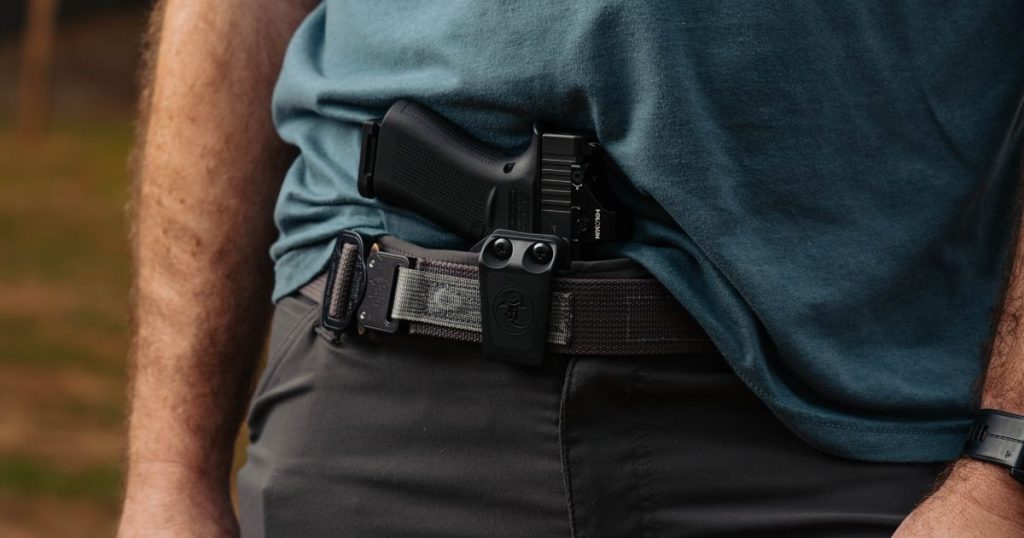
You can upgrade your holster or swap gear. But if your belt fails, the whole system shifts since it’s the anchor point. It stabilizes weight, controls movement, and keeps your setup consistent through a full workday.
Why Your EDC Belts Matter
- It prevents sagging. A belt with too much flex will dip under load, and that sag changes placement and increases printing.
- It maintains holster retention. Holsters rely on tension and structure. If the belt rolls or compresses, the retention changes.
- It supports a consistent draw. If your belt shifts during movement, your draw angle shifts too.
What to Look for in an EDC Belt
If your current belt was designed just to hold up pants, it’s not built for EDC. You need an EDC belt designed to handle your daily carry. Here’s what to look for:
- Reinforcement – A purpose-built EDC belt features internal reinforcement that adds structure without making it rigid. This keeps it supportive without unnecessary bulk.
- Low stretch – Stretch feels comfortable at first, but under load, it creates movement. Look for materials that retain their shape over long wear.
- Buckle profile – Bulky buckles create pressure points and visible lines under clothing. A low-profile buckle blends better under business attire and casual wear.
- Adjustability – Weight, layering, and daily movement change tension needs. A belt that allows small sizing changes helps you dial in comfort and stability.
Check out How Blue Alpha Belts Adapt to Your Day, EDC Belt Features That Matter, and Gun Belt Buckles Explained for more about EDC belts.
Now let’s look at how different professions shape EDC setups and what that means for your belt and gear choices.
Office and Corporate Professionals
For office and corporate roles, three things matter most:
- Discretion – You’re often within arm’s reach of coworkers or clients. Your setup can’t draw attention when you lean, sit, or reach.
- Comfort for long seated hours – Desk time exposes weak setups fast. Pressure at the waistline builds over time. If your belt shifts or digs in, you’ll feel it by mid-morning.
- Low printing – Thin dress shirts and lighter fabrics don’t hide mistakes. A stable foundation reduces movement, which helps reduce printing.
In this environment, subtlety wins.
Common Office EDC
Most office professionals keep their carry streamlined, so every item needs to have a clear purpose.
- Compact concealed carry – Smaller footprint, easier concealment under business attire.
- Slim wallet – Reduces bulk in pockets and keeps your silhouette clean.
- Phone and small flashlight – Practical tools that fit naturally into daily routines.
Belt Considerations
Your belt does more than hold up your pants. It supports the entire system. For office environments, look for:
- Low-profile buckle – A streamlined design blends better under tucked shirts.
- Stable support without bulk – You need stiffness to support concealed carry. But you don’t need a thick, heavy belt that prints through slacks.
- Works under tucked shirts – If you tuck regularly, your belt must sit flat and stay consistent, since shifting creates visible lines.
This is where purpose-built EDC belts matter. A properly constructed belt provides enough rigidity to stabilize concealed carry, while staying low-profile enough for business settings.
For example, Blue Alpha’s Low-Profile EDC Belt is designed around that balance: support where you need it but without unnecessary bulk. For office professionals, that foundation helps keep your entire setup secure and discreet throughout long workdays.
Alternative Carry Option
Some remote professionals also prefer off-body carry when wearing athletic or casual clothing.
For example, a purpose-built option like the Blue Alpha Fanny Pack allows you to carry essential gear without relying on belt loops. This can be helpful when wearing casual clothing (like gym shorts) that doesn’t support traditional belt carry.
A setup like this can bridge the gap between working at home and stepping out for errands while still keeping your EDC accessible.
Remote Workers and Hybrid Professionals
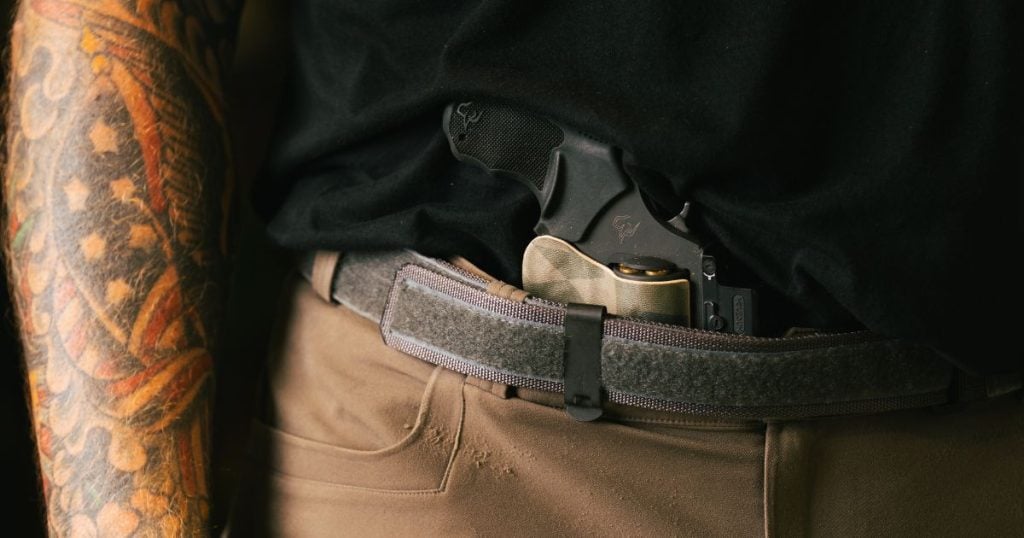
For remote and hybrid roles, your work EDC usually stays lighter and more streamlined. But lighter doesn’t mean less intentional. The goal is comfort at home while still staying prepared when you step out.
In this setting, three things usually matter most:
- Comfort for long hours at a desk – Working from home often means extended desk time. If your belt shifts or presses into your waistline, you’ll notice it quickly.
- Discretion when leaving the house – Even if most of your day is spent at home, your setup still needs to stay discreet in public.
- Low-profile carry under casual clothing – Joggers, jeans, and casual slacks don’t always hide bulky gear well. A clean, stable setup works better across relaxed clothing.
Because of this, remote professionals often benefit from a minimalist approach.
Common EDC
Because remote work environments are less structured, the goal isn’t maximizing gear. It’s keeping your setup comfortable enough to wear consistently while still being ready to leave the house without changing equipment.
- Compact concealed carry – A smaller firearm is easier to wear during long seated hours and casual movement around the house.
- Minimal pocket setup – Many remote professionals carry only essentials while working, such as a phone.
- Utility flashlight or small tool – Helpful for quick tasks around the house, garage, or yard without adding unnecessary bulk.
Belt Considerations
Remote work changes how long you actually wear your gear. You may be sitting for hours, standing up frequently, or moving between rooms throughout the day. A belt that feels fine during short wear can become uncomfortable when worn all day.
For remote and hybrid setups, look for:
- Comfort during long wear – Since you’re often seated, the belt should stay supportive without creating pressure points.
- Consistent stability with casual clothing – Joggers or relaxed office wear don’t provide much structure, so your belt needs to carry that load.
- Easy adjustment throughout the day – Small adjustments help when you switch between sitting, standing, or heading out.
So instead of relying on a flexible casual belt, a purpose-built design keeps your carry stable even with lightweight clothing.
Blue Alpha’s Low-Profile EDC Belt works well for hybrid routines because it balances structure and comfort. It stays supportive enough for concealed carry while remaining comfortable during long hours at a desk or moving around the house.
Trades, Contractors, and Hands-On Professionals
In trades and field work, your focus shifts.
- Durability – Your belt and gear rub against tools, edges, and surfaces all day. Weak materials show wear fast.
- Stability under movement – You twist, squat, and climb. If your setup shifts during movement, it will shift during draw.
- Resistance to sweat and abrasion – Heat, sweat, and friction are part of the job. Your gear needs to hold structure even after hours of wear.
In this environment, comfort comes from support and not softness.
Common Work EDC
Hands-on professionals often carry more robust gear, which adds weight and exposes weak EDC foundations.
- Full-size concealed carry – Larger footprint, often preferred for shootability.
- Knife or multi-tool – Used daily and not just carried.
- Flashlight – Essential for job sites, crawl spaces, and early or late shifts.
Belt Considerations
You need a belt with rigidity. However, rigidity isn’t about stiffness but about control. Here’s how:
- Prevents sagging – A flexible belt will dip under the weight of a holster, altering positioning and increasing printing.
- Reduces hip fatigue – When weight is distributed evenly, your hips and lower back take less strain. Over long shifts, that matters.
- Supports draw consistency – If your belt rolls, shifts, or compresses under load, your draw stroke changes.
A purpose-built belt gives you a stable platform. For trades and contractors, that platform supports heavier carry without turning your waistline into a weak point.
Belts like Blue Alpha’s Hybrid EDC or Battle Belt Lite are built to handle that kind of load. They provide the rigidity needed for holsters and tools while staying comfortable enough for long, active workdays.
First Responders and Tactical Professionals
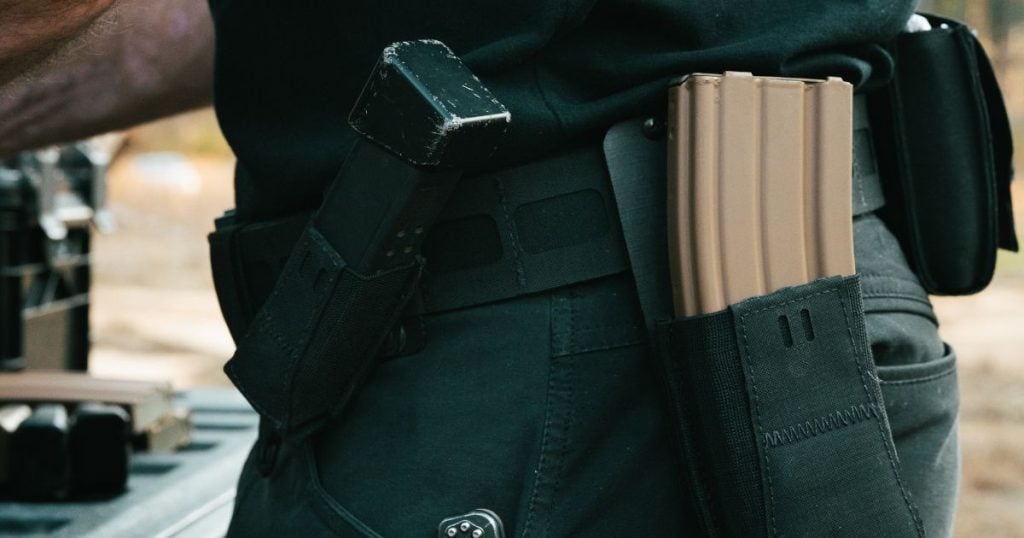
For first responders and tactical professionals, your setup leans toward duty gear, even if it’s not a full duty belt. Your priorities lean towards:
- Fast access – Your gear must sit in a consistent position. If placement changes, access time changes.
- High reliability – Equipment failure isn’t just inconvenient. It can compromise performance when it matters most.
- Gear compatibility – Your EDC may need to work alongside body armor, outer carriers, radios, or additional load-bearing equipment.
This environment pushes your setup harder than most professions.
Common EDC
Many tactical or responder-adjacent roles carry more than just a concealed firearm.
- Magazine pouches – Adds weight and requires stable positioning.
- Medical kits – Often compact, but critical. Placement must stay consistent.
- Duty-adjacent configurations – Hybrid setups that bridge plainclothes and uniformed responsibilities.
Belt Considerations
No two shifts look the same, so your belt needs to adapt.
- Adjustable belt sizing – Fine-tuned adjustments allow you to account for layering, seasonal clothing, or additional gear.
- Load shift control – A rigid, supportive structure keeps equipment from migrating during movement.
- Secure attachment points – Consistent mounting ensures holsters, pouches, and medical gear stay where you placed them.
A well-built belt provides the anchor point for that control. It supports added weight without collapsing under it and maintains consistent gear placement across shifts and movement patterns.
For professionals carrying multiple tools or duty-adjacent equipment, a dedicated platform may make more sense. Systems like Blue Alpha’s Battle Belts and Duty Belts are designed to support mounted gear, such as magazine pouches, medical kits, and other mission-critical equipment, while maintaining stability during movement.
Can One Setup Work Across Multiple Professions?
It depends on how different your environments really are. If your day moves between similar settings (like office to errands, or field work to casual public spaces), a supportive EDC belt with a streamlined setup often adapts better than people expect.
But there are limits.
A purpose-built EDC belt with the right level of rigidity can support concealed carry in business attire and still handle casual or active settings. But flexibility still has boundaries. For instance, a lightweight office configuration may not hold up during physically demanding work.
Here’s the honest answer: Many experienced carriers maintain more than one setup.
- One configuration for professional environments.
- Another for higher movement or load-bearing roles.
Trying to force one setup into every role usually leads to compromise. Compromise shows up as printing, discomfort, or inconsistent draw mechanics. If your professions or environments vary widely, it’s worth looking at whether a single system truly serves both.
EDC Should Work for Your Job, Not Against It
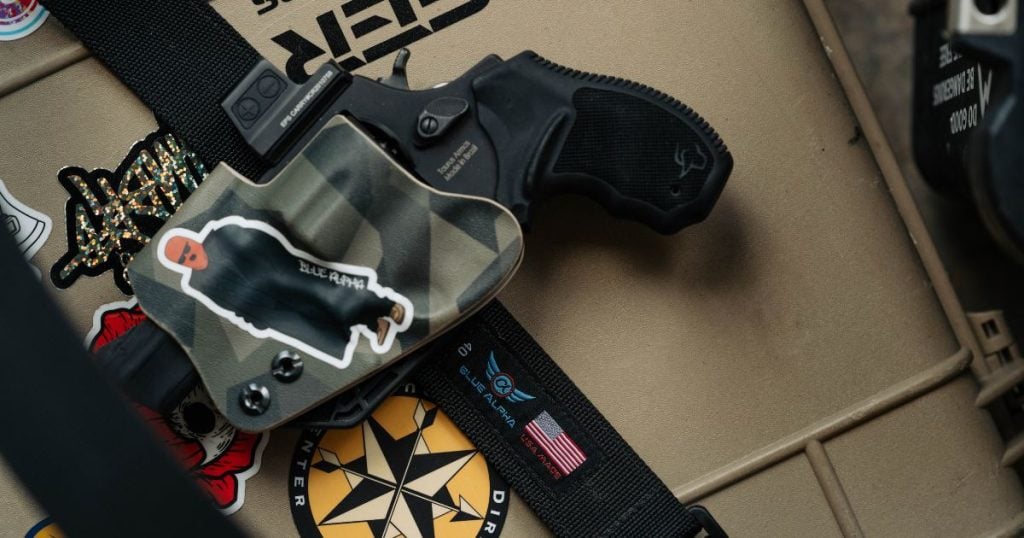
Your profession shapes how you move, what you wear, and how long your gear stays on. When your EDC is built around those realities, everything works better.
If your current setup shifts, digs into your side, or forces you to change how you move, it’s time to re-evaluate the foundation.
Explore Blue Alpha’s lineup of EDC and battle belts to find a setup that supports your profession instead of working against it.