


Choosing Between Top Pull and Side Pull for Your Blue Alpha Med Pouch
At the core, top pull and side pull describe how the insert leaves the medical pouch. Both versions use the same insert and medical contents. The only change is how you deploy it and how it interfaces with your belt.
Top Pull Setup
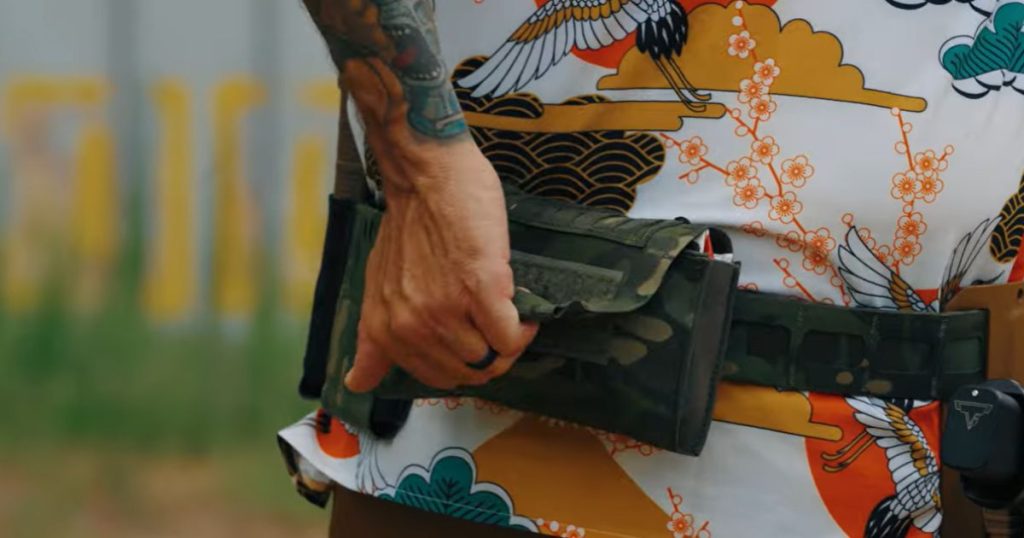
With a top pull setup, the entire package clears the pouch in one motion when you pull up.
So anything mounted to the pouch (like a tourniquet) deploys with the insert instead of staying on the belt.
Advantages of Top Pull
- Works well with externally mounted tourniquet holders. A tourniquet mounted to the pouch deploys with the insert rather than staying behind.
- Everything comes out as a single package. Insert, contents, and tourniquet stay together, reducing mental steps during deployment.
Tradeoffs to Consider
- Takes up slightly more vertical space. Because top pull carries everything as a single unit, the insert layout plays a larger role in how tall the pouch rides on the belt.
- Organization vs. compactness depends on the insert layout. A highly compartmentalized insert improves clarity but adds bulk. A simplified layout saves space but sacrifices separation.
Side Pull Setup

With a side-pull setup, the insert pulls out to the side. The carrier stays on the belt, and the insert clears it in one motion. Anything mounted to the carrier (like the tourniquet) stays in place while the insert deploys.
Advantages of Side Pull
- Lower profile on the belt. The carrier stays fixed on the belt and is tensioned to hold the insert, which keeps the profile flatter.
- Handles can be positioned for better indexing. Handle orientation can be adjusted so your hand finds them faster, especially when mounted behind the hip.
Tradeoffs to Consider
- Tourniquet mounts separately. The tourniquet stays on the carrier during insert deployment, which changes how the system works as a whole.
- Handle orientation matters more with side pull. Handle placement affects how easily your hand finds the pull under movement, which is why orientation matters more here than with top pull.
Which Setup Makes Sense for You?
This isn’t about picking a “better” option. It’s about choosing the setup that fits how you move, how your belt is built, and how you train.
Ask how the pouch behaves when things don’t go perfectly.
- Can you deploy it cleanly with either hand?
- Can you find and pull it without looking?
- Does the pull direction still make sense if your dominant side is compromised?
If one setup feels more natural at awkward angles or on the weak side, that matters.
And remember, your med pouch doesn’t live alone. So consider how it will mount to your gun belt and how it’ll interact with the surrounding gear.
- How tight is your belt layout?
- What’s sitting next to the pouch: holster, magazine carriers, radio?
- Does deployment interfere with anything else?
Pick the Setup You’ll Deploy the Same Way Every Time
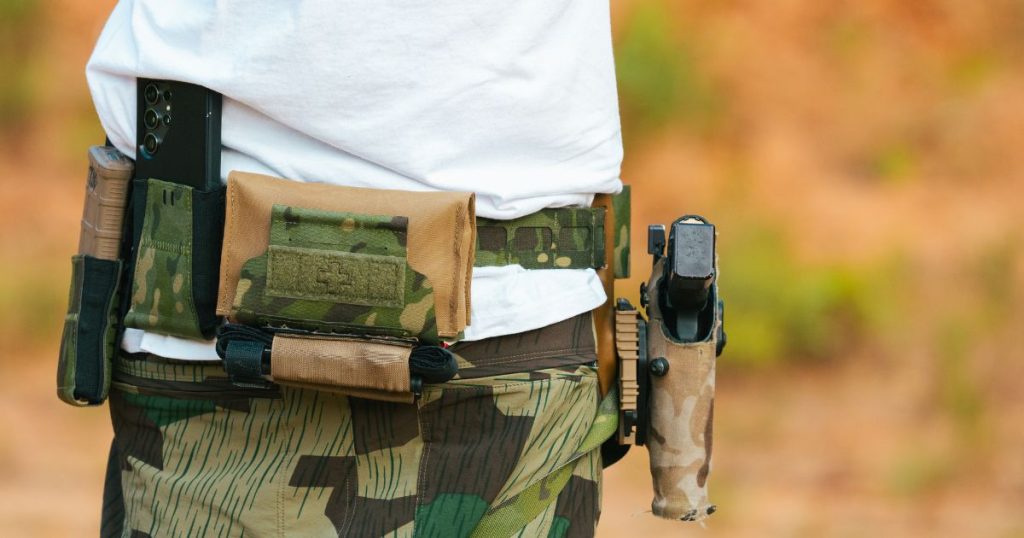
The right choice is the one you can deploy cleanly, consistently, and without hesitation, even when movement, stress, or injury complicates things.
Ready to dial in your setup? Check out the Blue Alpha Med Pouch to see how top pull and side pull configurations fit your belt.
And once you have it all set up, check out Training Drills to Stress-Test Your Tourniquet and Med Pouch.