


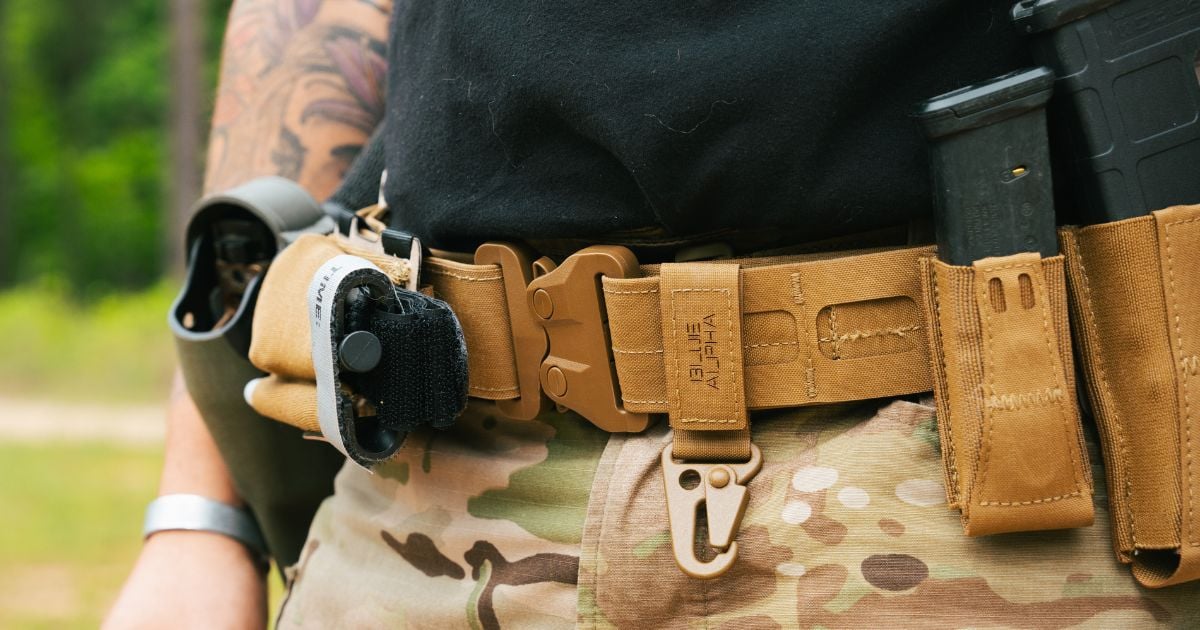
Build a Capable Battle Belt Without Carrying More Gear
Many people start building a battle belt one pouch or accessory at a time. Before long, it’s carrying plenty of gear, but it’s also heavier, bulkier, and less comfortable to use. Instead of asking what else you can add, it helps to ask what you actually need to carry.
Why More Gear Isn’t Always Better
Every item you add should make it easier to accomplish a task, not create new obstacles. If a piece of gear is rarely used or gets in the way of equipment you rely on, it’s adding more drawbacks than value.
Every Item Competes for Space
Every item on your battle belt takes up space that could be used for something else. As your setup grows, so do the tradeoffs.
More weight can become tiring during long periods of wear. Extra pouches create bulk that can interfere with movement or make it harder to work in tight spaces. Crowded gear can also slow access to your holster, magazine carriers, or medical kit when speed matters.
Even small additions have a cumulative effect. One extra pouch may not seem like much, but several “just in case” items quickly make your belt heavier, bulkier, and less efficient.
Build Around Your Most Common Use
Instead of planning for every possible situation, build your belt around the tasks you perform most often. That keeps your essential equipment in consistent locations, making it easier to find without thinking.
Using the same placement every time also helps develop muscle memory. Whether you’re training at the range or working under stress, consistent gear placement reduces unnecessary searching and helps your equipment become more intuitive to use.
A streamlined setup also gives you room to adapt. Rather than dedicating permanent belt space to gear you only use occasionally, you add those items when a specific task requires them and remove them when it doesn’t. That keeps your belt ready while leaving the flexibility for changing needs.
Gear That Should Stay on Your Belt, and What Should Be Temporary
The goal is to reserve dedicated belt space for equipment you use consistently while treating everything else as something you add only when the situation calls for it.
Gear That Belongs on Your Battle Belt
Some equipment is used often enough that it benefits from having a consistent location. Common gear includes the following battle belt accessories:
These items form the foundation of many battle belt setups because they support the tasks you’ll perform most often.
Keep These Items Temporary
Some equipment is valuable to have available, but doesn’t need to live on your belt every day.
This includes gear like:
- Multitools
- Flashlights
- Utility pouches
- Gloves
- Navigation equipment
- Administrative items
- Other task-specific equipment
Before adding an item to your belt, ask yourself:
- Is it required for today’s task?
- Will I likely use it?
- Does it need immediate access?
- Would it work better somewhere else, like a pack or chest rig?
For example, you might add extra equipment for a training class, competition, hunting trip, or fieldwork. Once that task is over, there’s often no reason to keep carrying those additional items.
How a Modular Belt System Adds Capability Without Bulk
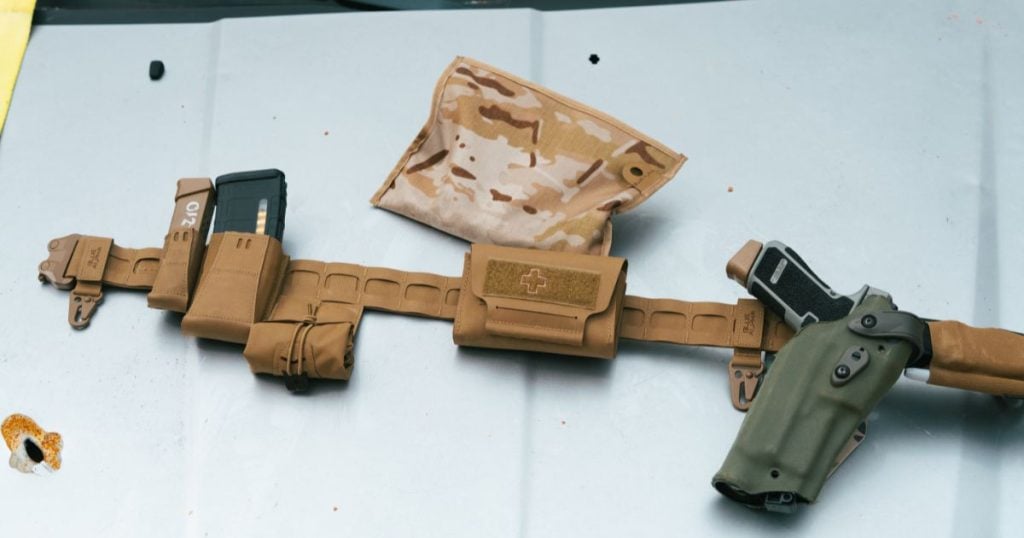
Once you know what deserves permanent space, the next question becomes how to carry everything else. A modular belt system solves that problem by letting you add equipment only when you need it.
Modular accessories let you expand your belt without rebuilding your entire setup. Instead of permanently mounting another pouch, you attach removable accessories only when a specific task calls for them and remove them when you’re finished.
For example, Blue Alpha’s Belt Adapter creates attachment points for compatible accessories without requiring you to redesign your battle belt setup. They make it easier to carry temporary equipment while keeping your primary gear exactly where you expect it.
You can use a belt lanyard to clip gear like gloves to your belt, or semi-permanent adapters (like Blue Alpha’s Non-MOLLE Adapters or MOLLE Strap) to add or remove gear directly from your belt.
Likewise, utility pouches and other removable accessories hold items you only need for a specific task, then come off once the job is done. Depending on your setup, you can also mount accessories below the belt with a Quick Detach Drop Mount Adapter. This allows you to add gear by optimizing space.
This approach lets one battle belt support a variety of roles without permanently increasing weight or bulk.
Build a Battle Belt That Stays Ready for Different Tasks
Keeping your core gear consistent makes your setup easier to use, while modular accessories give you the flexibility to carry additional equipment without permanently adding weight or bulk.
If you’re looking to build a battle belt that can adapt, explore Blue Alpha’s battle belts and accessories to create a setup that grows with your needs instead of growing unnecessarily.