


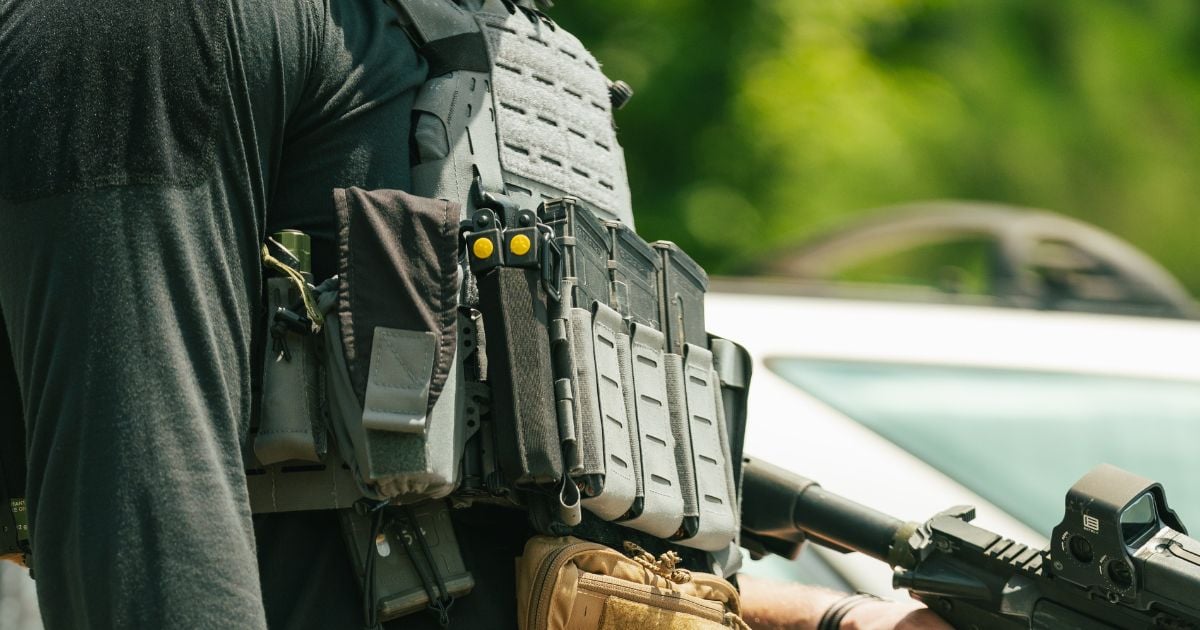
Plate Carrier Gear Placement: What Goes on the Front, Sides, and Rear?
A lot of plate carriers have unused MOLLE space, so it’s tempting to fill every available row. But adding gear doesn’t just increase carrying capacity. It can block access, change how your carrier sits, and make the rest of your setup harder to use. Before adding another pouch or reaching for an adapter, start by deciding where that equipment belongs and how it will affect the gear you already use.
Why Adding More Gear Can Make Your Carrier Less Effective
If you have to think about where your hand goes or move another item out of the way, your setup is working against you.
More Equipment Can Reduce Accessibility
The biggest problem with adding gear is losing access to the equipment you rely on most.
A new pouch mounted in the wrong place can partially block your magazine pouches, making reloads inconsistent. It can also interfere with tasks like adjusting your sling, accessing a radio, or checking equipment. Even if nothing is completely blocked, crowded equipment often forces you to reach around other gear or change your normal hand movements.
Every Addition Changes the Way the Carrier Performs
Every pouch, tool, or accessory changes how your carrier feels, even if the added weight seems small.
Weight placed too far to one side can make the carrier feel unbalanced. Adding bulk to the front can change how the carrier sits against your body when you kneel or shoulder your rifle. Extra equipment can also affect how the carrier moves as you walk, climb, or transition between positions.
Comfort matters, too. A well-balanced carrier distributes weight more evenly, while poorly placed gear can create pressure points or cause the carrier to shift during movement. That movement can become distracting during training sessions or extended wear.
Before You Add More Gear, Decide Where It Actually Belongs
Not every item deserves the same position on your carrier. A simple hierarchy can help you protect your most useful mounting space while keeping the rest of your equipment where it makes sense.
Front: Reserve Space for Immediate-Access Equipment
The front of your carrier should be your primary-access space for equipment you need consistently. Your main rifle magazines are a good example because their position directly affects your reloads.
If an item does not need immediate access, consider whether another location would work better before adding it to the front.
Sides: Keep Supporting Equipment Within Reach
The sides of your carrier can work well for equipment you need to access without giving it prime front-panel space.
Radios, GP pouches, additional magazines, navigation tools, and other mission-specific equipment may fit into this category. Side placement keeps these items within reach while leaving your primary equipment where you already expect to find it.
Rear: Reserve It for Gear That Does Not Need Immediate Access
The rear of your carrier can hold equipment that needs to stay with your loadout but doesn’t require immediate access. Additional rifle magazines are one example.
Think of the rear as secondary storage rather than primary access. If you need to reach an item quickly and consistently on your own, it will be better positioned elsewhere.
Elsewhere: Keep Low-Priority Gear Off the Carrier
Some equipment does not need a mounting point on your carrier at all.
If you only expect to use an item between stages, during breaks, or after the immediate task is complete, a pack or another part of your kit is a better place. Keeping lower-priority equipment elsewhere leaves more carrier space for gear that benefits from being close at hand.
How to Add Mounting Space Without Rebuilding Your Carrier
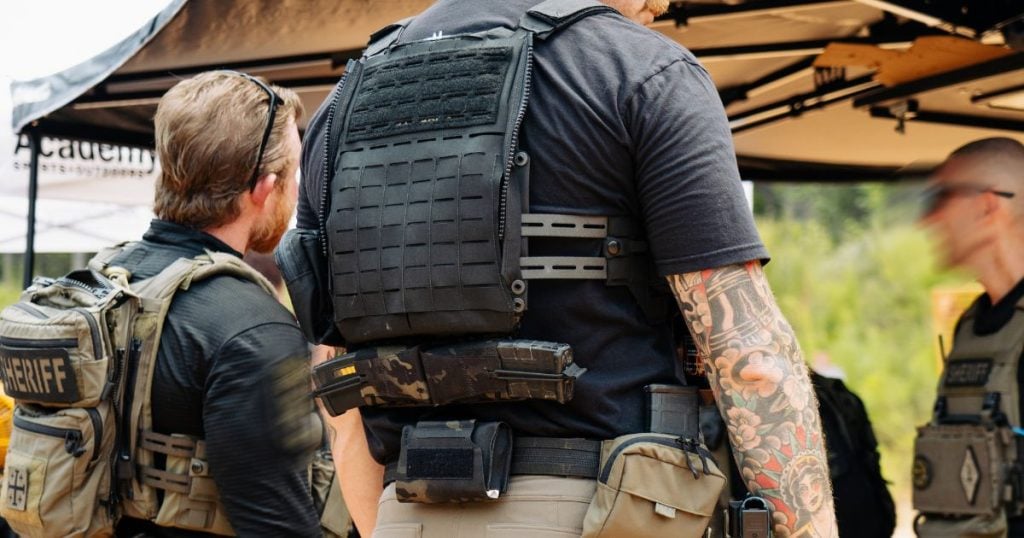
Once you’ve decided that a piece of gear belongs on your carrier, the next question is whether you actually have a good place to mount it.
If your existing setup already works, you shouldn’t have to relocate magazines, change your placard, or crowd the front panel just to make room for another item. A plate carrier adapter can create an additional mounting point while leaving your core setup intact.
Add Side-Mounted Space for Gear You Need Within Reach
A side-mounted adapter can use space beside your existing equipment instead of forcing another pouch onto the front of your carrier.
The Blue Alpha Wing Adapter is designed for this type of expansion. It attaches with hook-and-loop and forms a rigid CURV mounting platform for radios, OC spray, flash-bangs, and other compatible equipment. Its half-inch hole and slot spacing provide mounting options for a range of modern pouches.
This gives you another option when equipment needs to remain accessible but does not need front-panel space.
Add Rear Capacity Without Adding Front Bulk
If you need to carry additional rifle magazines but don’t need them in your primary reload position, the rear of the carrier can provide useful space without adding bulk to the front.
Blue Alpha’s +2 is designed for this purpose. The low-profile panel attaches to the loop-compatible backing on a plate carrier and provides MOLLE slots for mounting additional rifle magazine pouches. This lets you stage extra 5.56, .308, or other rifle magazines on the rear of your carrier while keeping your front placard unchanged.
Because rear-mounted magazines experience more movement and contact with your surroundings, pouch retention also matters. We recommend using magazine pouches with a flap, shock cord, or other added retention rather than open-top pouches.
Add Capability Without Crowding Your Carrier
Adding gear should solve a specific need, not simply fill available space. Keep immediate-access equipment where you can reach it, move supporting gear to the sides, and use rear space for equipment that does not need to be part of your primary-access setup.
Once your carrier is set up the way you want it, look at how the rest of your gear works with it. Explore Blue Alpha’s battle belts and support accessories to build a setup that keeps your equipment organized, accessible, and ready to use.