


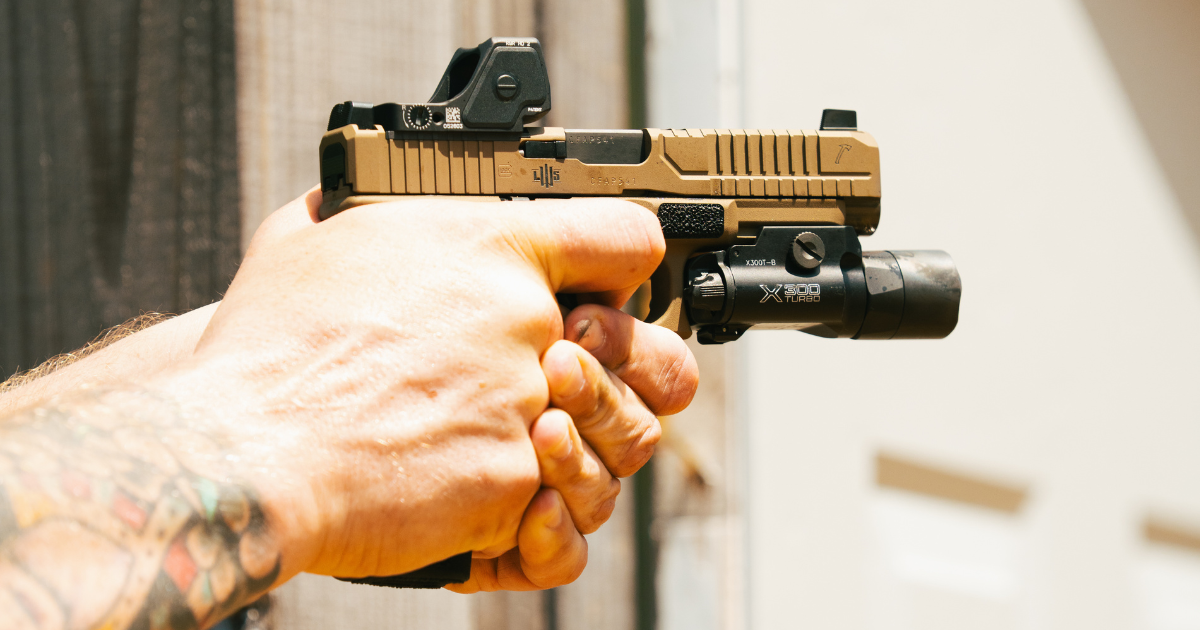
Foundational Skills Every Gun Owner Should Practice
Every gun owner starts at the same place: the basics. Whether you’re brand new or have years of experience, the skills that matter most don’t change. Safe handling, consistent fundamentals, and a clear awareness of your surroundings are what make you confident and capable with your firearm.
Core Principles of Responsible Gun Ownership
Let’s start with the core principles that keep you and everyone around you safe.
The Four Primary Rules of Firearm Safety
- Always treat every firearm as if it’s loaded. Even if you’re “sure,” double-check. This mindset prevents careless mistakes.
- Keep the muzzle pointed in a safe direction. If the gun is always pointed safely, accidents can’t cause harm.
- Keep your finger off the trigger until you’re ready to shoot. This is about trigger discipline and protects against unintentional discharge.
- Know your target and what’s beyond it. Bullets travel far. Being aware of your surroundings is part of responsible gun ownership.
These four rules create a foundation. They’re the starting point for every safe interaction with a firearm. But safety doesn’t stop at knowing the rules. You need to practice them until they become second nature.
Shooting Fundamentals Every Gun Owner Should Practice
These fundamentals apply whether you’re working on accuracy at the range or carrying every day.
Sight Alignment and Sight Picture
- Sight alignment means lining up your front and rear sights so they’re level and even.
- Sight picture adds the target into that alignment.
- To practice, pick a small aiming point and focus on keeping the front sight sharp and centered.
Dry-fire practice is one of the best ways to improve. Make sure your firearm is unloaded and pointed in a safe direction. Then, practice bringing the sights onto an object in your home (like a light switch) while keeping everything steady. A few minutes a day builds consistency without using ammo.
Check out Dry Fire Training: Shoot Like a Pro to get started.
Trigger Control
Trigger control isn’t just about accuracy. It’s also about safety. A deliberate press means you’re firing only when you mean to.
The trigger press should be smooth and steady. Jerking or slapping the trigger pulls the sights off target, which leads to misses. Instead, press straight back with controlled pressure.
Check out How Trigger Control and Proper Grip Improve Your Shooting and Trigger Discipline: The #1 Firearm Safety Habit for more on this skill.
Recoil Management
Every firearm has recoil, but how you handle it makes a big difference.
- A firm grip with both hands and a balanced stance help you stay in control.
- Keep your weight slightly forward and elbows unlocked to absorb the pushback.
When you manage recoil well, your sights settle faster, and follow-up shots are quicker and more precise. This skill is the key to moving from careful single shots to confident precision shooting under time pressure.
For additional help, read Recoil Management Tips and Drills and 3 Stances Every Shooter Should Know.
Shooting Techniques That Build Confidence
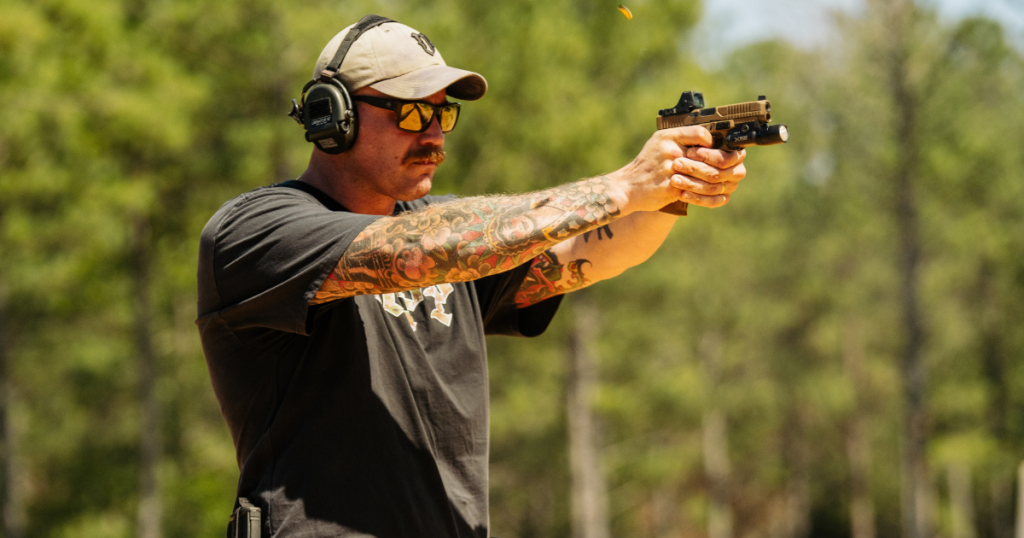
The right shooting techniques help you turn the fundamentals into skills you can rely on in any setting.
Range Drills for Practicing Fundamentals
Simple, repeatable drills are the best way to sharpen core skills. For example:
- Slow-fire groups: Focus on sight alignment and trigger control by shooting tight groups at close range.
- Ball and dummy drill: Mix live rounds with dummy rounds in your magazine to reveal flinches and improve recoil management.
- One-shot draw drill: Practice drawing, firing a single accurate shot, and reholstering safely.
These drills reinforce habits that carry over to every other aspect of shooting. For additional drills, read 5 Low-Round Count Pistol Drills.
Adding Precision Shooting to Your Training
Precision shooting isn’t just for competition. It makes you more confident and disciplined at every range session.
So once the basics feel natural, you can push your skills further. Incorporate smaller targets at longer distances. This forces you to pay closer attention to sight picture and trigger control.
Transitioning Between Targets and Positions
Real-world scenarios and defensive shooting often require moving quickly. These shooting techniques help you stay accurate under pressure and prepare you for more than static range work.
- Practice shifting your sights from one target to another without losing alignment.
- Add positional changes (standing to kneeling, or using cover) to make drills more dynamic.
Explore our Training Resources page if you need help locating firearms training near you.
The Role of Situational Awareness
Marksmanship gets a lot of attention, but situational awareness is just as important. You can’t respond to what you don’t notice. Responsible gun ownership means knowing how to read your environment as well as how to shoot.
Carrying concealed adds another layer of responsibility. You’re not just protecting yourself. You’re making decisions that affect everyone around you.
Many self-defense experts will tell you that the best fight is the one you never get into. So being aware of what’s around you helps you avoid trouble before it starts. Staying alert to unusual behavior, exits, and potential risks gives you options besides reaching for your firearm. This balance is what makes carrying smart, not just armed.
Check out How Situational Awareness Improves Self-Defense for a deeper dive into this skill.
Belts and Holsters That Support Foundational Skills

Even the best shooting techniques fall apart if your gear isn’t set up right. A stable, well-designed belt is the backbone of safe everyday carry and productive training. It keeps your holster locked in place so your draw is smooth and repeatable.
Because consistent gear placement supports consistent skills. When your holster doesn’t shift, you can focus on trigger control, sight alignment, and recoil management instead of fighting your setup. Over time, this builds muscle memory and reinforces safe handling.
The right belt and holster combo isn’t just equipment. It’s part of your training discipline.
Blue Alpha Belts for Everyday Carry
Blue Alpha offers several everyday carry (EDC) belt options. Each balances strength with comfort so you don’t have to choose between stability and wearability.
Low Profile EDC Belt – A slim, lightweight belt that disappears under casual clothing. It’s designed for discreet concealed carry while providing the rigidity to keep your holster steady.
Hybrid EDC Belt – The Hybrid uses the same reinforced design as the Low Profile, but features a sturdy Cobra buckle that offers a compact fit with locking power.
Both options keep your setup secure without rolling over or digging in, so your gear stays exactly where you want it when running drills at the range or carrying all day.
To learn more about EDC belts, read:
- EDC Belt Features That Matter (and What to Avoid)
- How to Clean and Care for Your EDC Belt
- The Lifecycle of an EDC Belt
Blue Alpha Battle Belts
Blue Alpha’s battle belts provide a larger platform for gear for training, competition, or professional use. They’re designed to handle more weight and keep equipment organized in high-demand situations.
Battle Belt Lite – A streamlined option for those who want the stability of a battle belt without excess bulk. It’s lightweight, comfortable, and strong enough for a full training setup.
MOLLE Battle Belt – Built with modular attachment points, this belt makes it easy to customize your loadout with holsters, pouches, and other mission-specific gear.
EDC Belts vs. Battle Belts: Why You Might Need Both
EDC belts and battle belts serve different purposes.
- An EDC belt is for discreet, comfortable daily carry. You can wear it under a t-shirt without drawing attention.
- A battle belt is for training days, competitions, or professional environments where quick access to more gear is needed.
Many gun owners keep both: an EDC belt for everyday life and a battle belt for range work or serious scenarios.
To learn more about belts, read Tactical vs Battle Belt vs Gun Belt vs Duty Belt.
Safe Habits, Strong Skills, Smart Carry
Mastering the basics of firearm handling isn’t just a starting point. It’s the foundation of responsible gun ownership. Core safety rules, solid shooting fundamentals, and sharp situational awareness work together to make you more prepared and disciplined.