


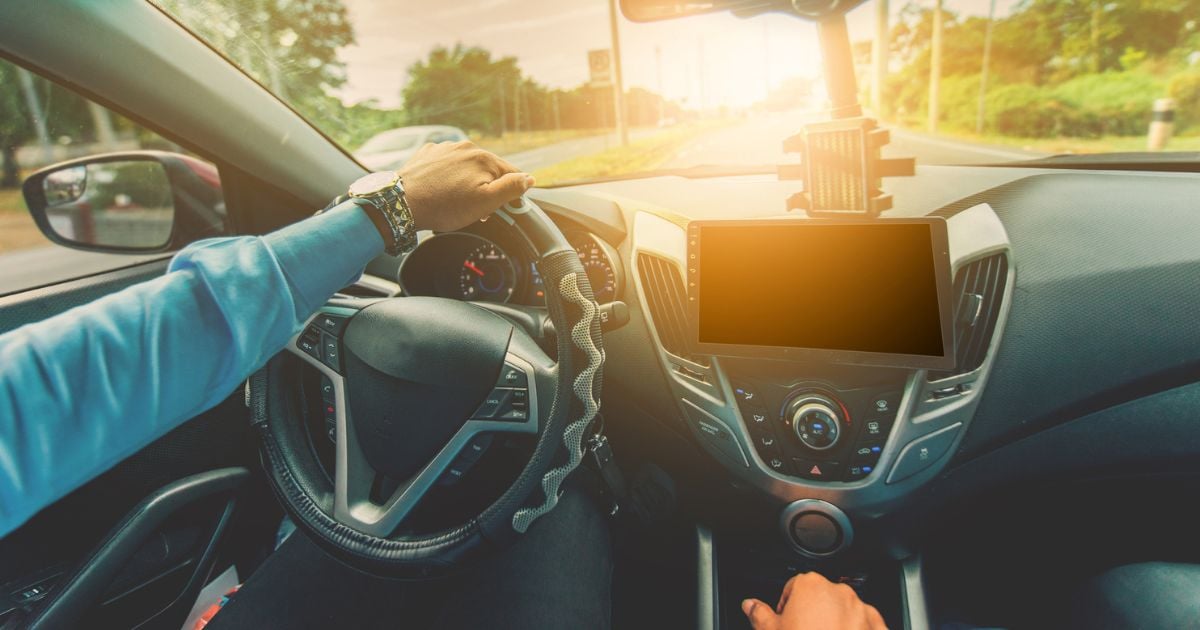
How to Conceal Carry While Driving
Carrying a firearm on the road adds a few challenges you don’t face while standing or walking. The moment you sit, your belt shifts, pressure points show up, and your draw path becomes crowded by seatbelts, center consoles, and armrests. There’s also a safety factor that’s easy to overlook. Depending on your setup, the muzzle might point toward your leg or torso when you sit.
That’s why concealed carry while driving isn’t about removing your firearm but adjusting how you carry it.
Start With the Right Gun Belt
A quality belt makes all the difference when gear weight and posture constantly shift. The belt is the foundation of your setup. It keeps your holster stable, distributes weight, and supports comfort whether you’re standing, walking, or sitting behind the wheel.
The trick is finding the right balance of rigidity and flexibility. A too-stiff belt digs into your sides when you bend or sit, creating pressure points that make long drives miserable. A belt that’s too soft, on the other hand, allows sagging and poor holster retention. This is a setup that’s neither comfortable nor safe.
The ideal gun belt holds your holster securely without sacrificing comfort when your position changes.
For instance, the Blue Alpha Low Profile EDC Belt and Hybrid EDC Belt are designed with adjustable sizing that allows you to fine-tune the tension for both standing and seated positions. Their construction blends structure with flexibility so your holster remains stable while reducing pressure at the waistline.
Belt Adjustments That Make Driving Easier
1. Slightly Loosen Belt Tension
When you sit, your abdomen and hip flexors naturally compress, so what feels secure while standing can quickly become restrictive.
Slightly loosen your belt to relieve that pressure without sacrificing retention. The goal is to keep your holster stable, but not so tight that it digs in.
2. Shift Gear Off the 3 O’Clock Position
The 3 o’clock carry spot often lines up directly with the seat’s side bolster and seatbelt buckle. Shifting your holster slightly forward to the 2 o’clock position or slightly back toward 4 o’clock creates extra clearance and smoother movement.
If you prefer appendix carry, lowering the ride height can also help reduce seatbelt interference and improve comfort for long trips.
Read Choosing the Best Way to Conceal Carry for more on holster positioning.
3. Adjust Ride Height and Cant for Seated Access
A small change in holster angle can improve how easily you draw when seated.
For inside-the-waistband (IWB) or appendix (AIWB) setups, try a 10–15° forward cant to prevent muzzle poke and allow a smoother, more natural reholster.
4. Clear Seatbelt and Console Interference
Seatbelts and center consoles quickly become obstacles during a draw. Practice unbuckling your seatbelt as part of your draw sequence to build muscle memory.
When Waist Carry Still Isn’t Comfortable While Driving
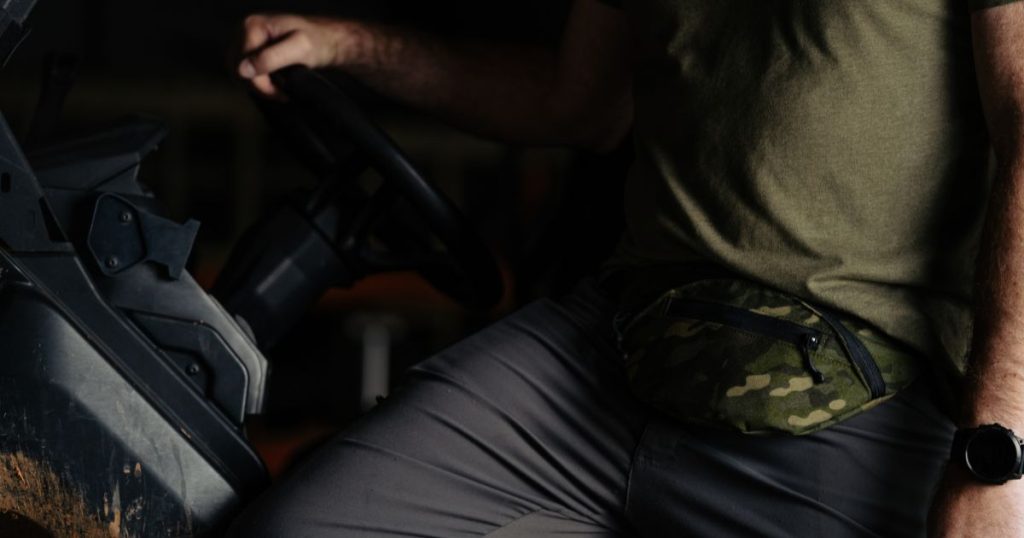
Many carriers find that, no matter how much they adjust their belt, sitting for long periods still creates pressure or restricts access. The good news is that waist carry isn’t your only option for concealed carry driving.
The Fanny Pack Advantage
For long drives or daily commutes, a fanny pack designed for concealed carry offers an alternative way to carry that’s both comfortable and discreet. It keeps your firearm positioned in front of your torso, clear of the seatbelt and console.
It’s also a strong option for anyone who needs to step in and out of vehicles throughout the day: delivery drivers, plainclothes professionals, or commuters who don’t want to readjust a belt every time they move.
You get flexibility, comfort, and control all without compromising concealment.
Take a look at Blue Alpha’s CCW Fanny Pack that is purpose-designed for concealed carry with a built-in holster attachment. The structured design supports safe draw angles, and the quick-access zipper lets you reach your firearm without twisting or unbuckling. Plus, it can be worn on your waist or across your chest.
Practice Safe Draws From a Seated Position
Begin with dry-fire practice before handling live ammunition. Dry-fire builds muscle memory without risk. Only move to live-fire drills after you’re consistently smooth and safe with an unloaded gun.
For Waistband Carry
- Unbuckle the seatbelt with your support hand first. This keeps your strong hand free and your motion predictable.
- Lean slightly forward to clear your torso line and create a safe muzzle path.
- Draw slowly and deliberately. Keep the muzzle pointed away from your legs and body.
- Keep your trigger finger indexed along the frame until you’re on target. Never trade control for speed.
- Reholster with two hands if possible so you can clearly see the holster and guide the firearm safely.
For Fanny Pack Carry
- Use your support hand to unzip the pouch
- Pull the zipper straight back toward your body for a clean, consistent opening.
- Draw slowly and keep the muzzle pointed forward, not down toward your lap.
- Reholster, taking your time to clearly see into the pouch before guiding the firearm back in.
Safety Tips
- Practice only in a parked, safe location where you’re allowed to train.
- Treat every practice pull as if the gun were loaded. That mindset prevents careless habits.
- If you feel rushed or awkward, stop and reset. Smooth, repeatable actions are what you want.
For more on dry fire, read Dry Fire Training: Shoot Like a Pro.
Comfort and Readiness Go Hand in Hand
Whether you stick with waistband carry or switch to a purpose-built fanny pack, the goal is the same: safe access and consistent control every time you get behind the wheel.
Take a look at Blue Alpha’s EDC Belts and CCW Fanny Pack to find the carry option that fits your routine.