


How to Avoid Printing When Carrying Concealed
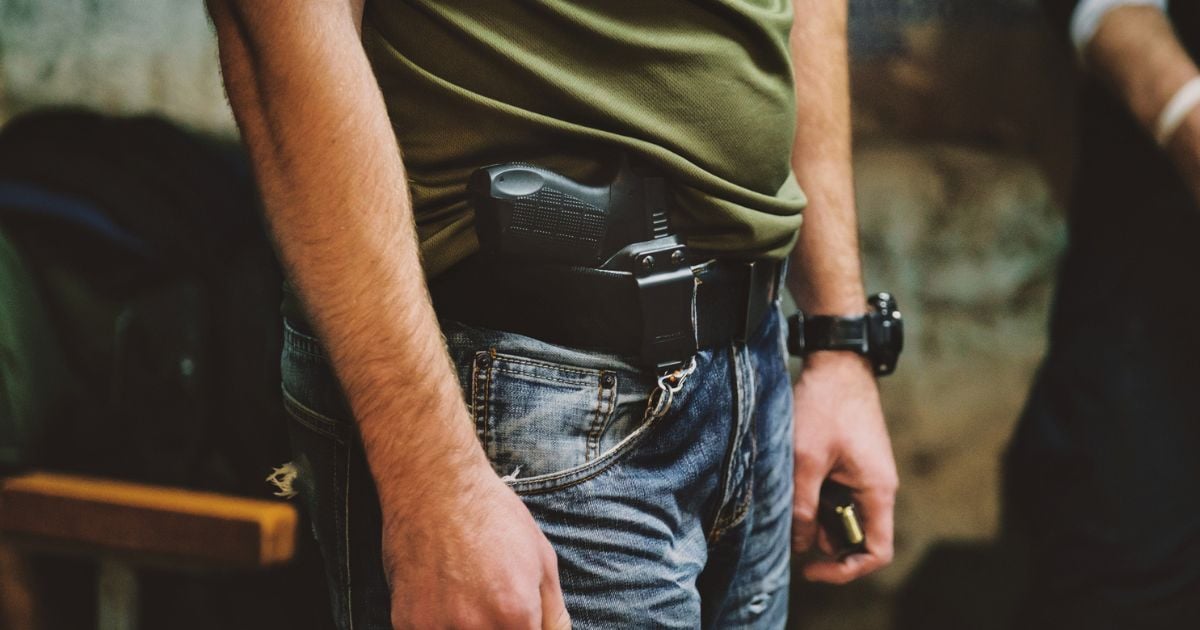
Printing is when the outline of a concealed firearm becomes visible through your clothing. Instead of staying hidden, parts of the gun show through the fabric in a way that others can notice.
Common examples include:
- The grip outline pressing against a shirt or jacket.
- Slide corners creating sharp lines under thin fabric.
- A bulge at the belt line where the holster or firearm sits.
Printing changes based on the clothing you wear and your concealed carry setup, so printing isn’t just about the gun.
What Causes Printing When Concealed Carrying?
Printing usually is a result of how your firearm, holster, and belt work together (or don’t). Small issues stack up fast.
Firearm Size and Shape
Grip length matters more than slide length for concealment.
- The slide sits inside your pants, where clothing can hide it.
- The grip sits above the belt line, where fabric has to stretch over it.
That’s why compact pistols with shorter slides can still print badly if the grip is long or angled outward. Corners, texture, and magazine base plates can also push fabric out and create visible edges.
So if you’re seeing printing, the grip is usually the first place to look.
Ride Height and Cant
Ride height and cant control where and how the grip sits against your body.
- Ride height determines how much of the grip sits above the belt line. The higher it rides, the more of the grip is exposed.
- Cant controls the angle of the grip. Too little cant can push the grip straight out. Too much cant can create pressure in one spot and form a visible bulge.
Minor adjustments here often reduce printing without changing gear.
Holster Design and Stability
A rigid, well-supported holster keeps your firearm in place all day. Less movement means fewer visible outlines. And the holster design determines whether that position stays consistent.
Even with perfect ride height and cant, a holster that shifts or flexes during movement won’t help. When a holster tips outward under weight, the grip angle changes, and printing follows.
Belt Support and Load Distribution
Your belt controls how the weight of your firearm is carried.
- A rigid, supportive EDC belt spreads weight across your waist.
- A soft or under-supported belt lets the holster tip and sag.
When a belt flexes, the grip leans outward. That exaggerates outlines and worsens printing, especially when you sit, bend, or move. Proper load distribution keeps the firearm pulled in tight, rather than fighting gravity.
How to Prevent Printing Without Sacrificing Access
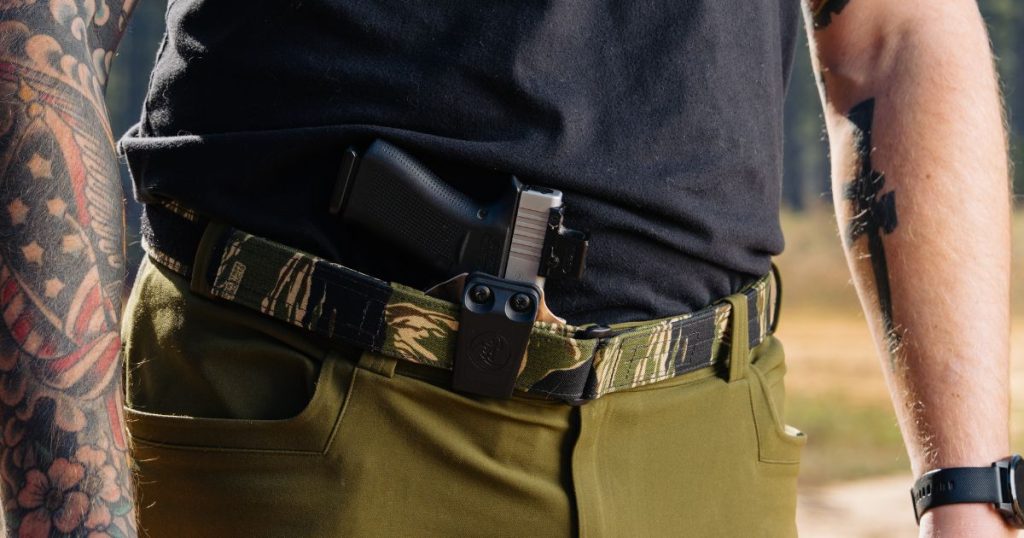
Reducing printing doesn’t mean hiding the gun deeper or slowing your draw. Most fixes come from small, practical adjustments.
Adjust the Carry Position
Before buying any new gear, adjust where and how you carry.
- Shifting your clock position even half an inch can change how the grip sits.
- A slight cant adjustment can tuck the grip inward instead of pushing it out.
- Ride-height changes can reduce pressure at the beltline.
Just remember to focus on how the setup works on your body, not someone else’s. Body shape, posture, and daily movement matter more than copying a popular setup.
For more help, read Concealed Carry for Every Body Type.
Choose Support Gear That Matches the Load
A rigid, properly sized belt keeps the holster from tipping or sagging under weight. Better support from a belt can:
- Pull the firearm closer to your body
- Reduce shifting during movement
- Minimize outlines, even with larger firearms
Printing is often a support problem, not a firearm problem. Check out EDC Belt Features That Matter (and What to Avoid) for more details.
Balance Clothing Fit With Movement
Fit matters, but so does how clothing moves.
- Overly tight clothing stretches across the grip, highlighting edges.
- Oversized clothing can still print when it drapes, folds, or pulls as you sit or bend.
Look for fabrics and cuts that hang naturally and stay forgiving in motion. A setup that looks fine standing still should also work when you walk, sit, and reach.
Read our other guides to learn more about how to make your clothing work with concealed carry:
- Winter EDC: How to Adapt Your Gear for the Cold
- Mastering Summer EDC and Concealed Carry
- Concealed Carry for Women: How to Stay Armed, Stylish, and Comfortable
CCW Printing FAQ
If I’m printing, does that mean my gear is wrong?
Not necessarily. A quality holster and belt can still print if ride height, cant, or carry position aren’t dialed in for your body. Before upgrading gear, adjust your setup and re-check anchor, angle, and coverage.
Does a smaller gun prevent printing?
No. Smaller doesn’t always mean easier to conceal. A compact pistol with a long or angled grip can print more than a larger firearm that’s properly supported and positioned. If the grip pushes outward above the belt line, it’s more likely to show, no matter how short the slide is.
Do extra clothing layers fix printing?
Not always. If the firearm shifts, tips outward, or presses into clothing when you move, layers won’t hide that. In some cases, added layers bunch or pull in ways that make outlines more obvious, especially when sitting or bending.
Printing Is a Setup Issue
Before replacing your firearm or overhauling your gear, adjust what you already have. Shift your carry position slightly, fine-tune ride height and cant, and check whether your belt is truly supporting the load. Small changes often fix what feels like a big problem.
If you want to reduce printing without sacrificing access, start with the foundation. Explore Blue Alpha’s EDC belts and other carry-support options to build a setup that stays secure, consistent, and discreet throughout the day.
To learn more, check out One Belt, Any Environment: How Blue Alpha Belts Adapt to Your Day.